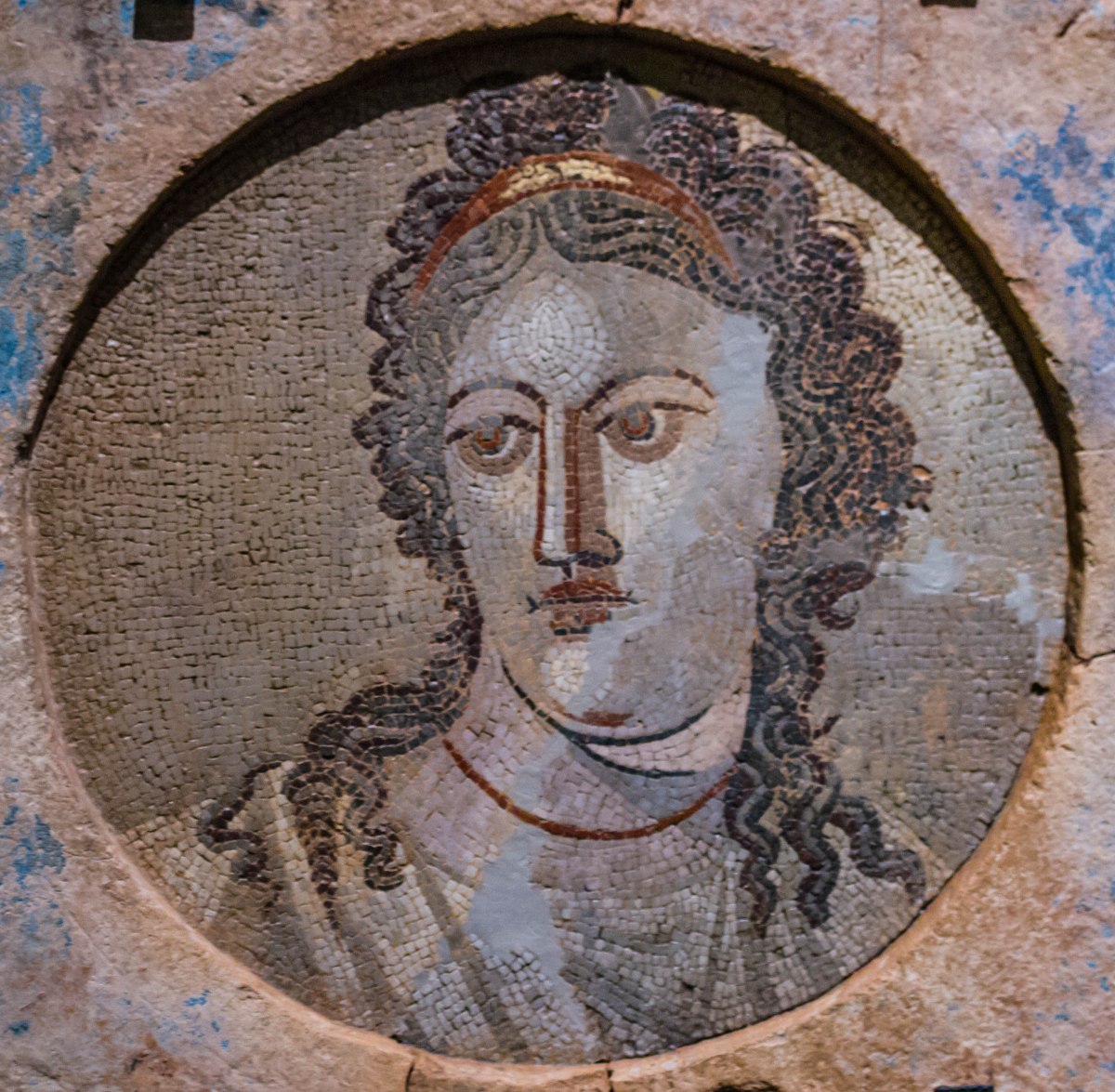
Ancient Greece: Mnemosyne and the Muses
“They say that Mnemosyne discovered the uses of the power of reason, and that she gave a designation to every object about us by means of the names which we use to express whatever we would and to hold conversation one with another; though there are those who attribute these discoveries to Hermes. And this goddess is also attributed the power to call things to memory and to remembrance which men possess, and it is this power which gave her the name she received.”
Diodorus Siculus, Library of History 5. 67. 3
It’s possible that you’ve never heard the name Menemosyne, which is the latin spelling of the Greek name Μνημοσυνη. Mnemosyne was one of the Titans, the daughter of the earth goddess Gaia and the sky god Uranus. She was also one of the many lovers pursued by Zeus, and they shared nine consecutive nights together. Out of this union were born the nine Muses.
- Calliope, the Muse of epic poetry
- Diodorus Siculus, Library of History 5. 67. 3
- Cilo, the Muse of history
- Euterpe, Muse of music
- Thalia, Muse of comedy and pastoral poetry
- Melpomene, Muse of tragedy
- Terpsichore, Muse of dance
- Erato, Muse of love and lyric poetry
- Polyhymnia, Muse of hymns and sacred poetry
- Urania, Muse of astronomy
While the names and roles of the Muses would continue to be invoked by artists of all types for the next two millenia, Mnemosyne’s name faded. She was after all not a central character in the great stories of antiquity. One of the few modern reminders of the Titan who discovered the uses of reason is the word “mnemonic,” a memory technique. There is however a more modern translation of her name: Memory.
Roman Republic: Marcus Tullisu Cicero
“Memory is the treasury and guardian of all things.”
Cicero
Marcus Tullisu Cicero was many things. Politician, philosopher, writer, translator, lawyer, and member of the Roman senate just to name a few. He was well traveled, well educated, incredibly prolific, and a fierce supporter of the Roman Republic. It was his opposition, first to Julius Caesar, then to Mark Antony, that eventually led to his assassination in 43 BC. He left behind a collection of writings almost unmatched in their influence on ages to come.
In “De Oratore” Cicero described the Method of Loci, a system of memory whose invention both Cicero and Quintilian attribute to Simonides of Ceos, an acclaimed lyric poet. The story goes that during a banquet, Simonides was called outside to meet two men. When he left, the roof collapsed, killing everyone inside. As the bodies were unrecognizable, Simonides identified them based on his memory of where each person had been seated. This led him to develop the Method of Loci, a mnemonic technique where items to remember are mentally placed in familiar spatial locations.
In Circreo’s time, 300 years later, the Method of Loci was well known among the educated political class and. The method is both simple and powerful, consisting of just seven steps.
- Select a Location: Choose a familiar place that you can easily visualize. It could be your house, your workplace, a regular walking route, or any other place you know well.
- Identify Specific Landmarks: Within this location, select specific spots or objects (loci) that stand out. These will be the places where you will “store” the information you want to remember. The loci should be chosen in a specific order that you can easily follow.
- Assign Information: Take the information you need to remember and associate each piece with one of your loci. This can involve visualizing an image, an action, or a scene that connects the piece of information to the specific locus
- Visualize the Association: Create a vivid, detailed, and preferably unusual or emotional mental image of this association. The more unique and vivid the visualization, the more likely you are to remember it.
- Walk Through Your Memory Palace: Mentally walk through your chosen location in the correct order, visualizing each of the loci along with the information assigned to it. Repeat this walk several times to reinforce the memory.
- Retrieve Information: When you need to recall the information, simply take a mental walk through your location again, visiting each of the loci in order. The associations you created should trigger the information you assigned to each spot.
- Review Periodically: Like all memories, those created using the Method of Loci will fade over time. To keep them fresh, periodically revisit your Memory Palace and walk through the associations.
While Simonides gets credit for creating and formalizing the Method of Loci, earlier Greek works also mention such a system, including Aristotle’s “On Memory and Reminiscence.”
The Middle Ages: Saint Thomas Aquinas
“There are four things whereby a man perfects his memory.”
Thomas Aquinas
In the 13th century the works of both Cicero and Quintilian were being rediscovered by Christian scholars, and soon the use of the Method of Loci had become an integral part of memorization, meditation, reflection and oration on the meaning of scripture. In the “Summa Theologica”, St Thomas places the art of memory in the virtue of Prudence. He then lays out the “Four things whereby a man perfects his memory”.
- First, when a man wishes to remember a thing, he should take some suitable yet somewhat extraordinary illustration of it.
- Second, whatever a man wishes to retain in his memory he must carefully consider and set in order, so that he may pass easily from one memory to another.
- Third, we must be anxious and earnest about the things we wish to remember.
- Fourth, we should often reflect on the things we wish to remember.
As you can see, these techniques are not substantially different from those described by Cicero.
The Renaissance: Giordano Bruno
“This art can be applied to the most important things as well as to the most frivolous; to things divine and human; to the investigation of wisdom; to the recollection of an infinity of things…”
Giordano Bruno
Giordano Bruno was an Italian philosopher and cosmological theorist. He was also a Hermetic occultist. “Ars Memoriae” was first published in 1582 as part of “Cantus Circaeus”. In it Bruno presents a series of Method of Loci, (by then referred to as a “Memory Place”), techniques as part of a larger narrative, with an emphasis on the philosophical and metaphysical implications of memory and knowledge. Bruno’s approach was a complex, interconnected system of memory techniques that combined aspects of the ancient Method of Loci with astrological symbols and his own unique structures, such as “memory wheels.”
Bruno’s memory wheels, also known as “rotating wheels” are part of his sophisticated mnemonic system. They are intricate and highly symbolic, drawing on various philosophical and esoteric traditions, including astrology and the kabbalah. These wheels were circular diagrams divided into concentric rings. Each ring was assigned a set of images or symbols, which represented specific ideas or categories of information. The images were designed to be arranged in such a way that they could be combined and recombined in various patterns, allowing for a large number of possible associations and therefore a great deal of information to be stored.
One of the more unique features of Bruno’s memory wheels was that they could be used in different applications. They could be used as just a simple mnemonic device to remember a list of items, or they could be used as a far more complex tool for generating and exploring new ideas.
Modern Day: Neuroscience and Memory
“Just because someone tells you they have a memory problem doesn’t necessarily mean they have a memory problem.”
Elizabeth F. Loftus
For millennia philosophy was our only means of insight into the mind, and thus into memory. But philosophy couldn’t tell us how memories are made, or lost. Psychiatry began to take shape in the 19th century, and while it gave us new tools for dealing with mental illness, it wasn’t until the 1950s that the physical processes through which memories are made began to be understood. As medical technology has advanced, so has our understanding the different types of memory, and of how the brain creates and stores those memories.
Types of Memory
Memory is a complex cognitive process, and neuroscientists often categorize it into different types based on duration, capacity, and the nature of the information stored. Here are some of the main types of memory:
- Sensory Memory: This is the earliest stage of memory. It allows individuals to retain impressions of sensory information after the original stimuli have ended. Sensory memory is very brief and is usually discarded quickly. There are different types of sensory memory, including iconic memory (visual), echoic memory (auditory), and haptic memory (touch).
- Short-Term Memory (STM): Also known as working memory, this type of memory allows recall for a period of several seconds to a minute without rehearsal. Its capacity is also very limited. The classic example is being able to remember a phone number for a few seconds to dial it.
- Long-Term Memory (LTM): This type of memory can store information for a long duration, possibly a whole lifetime. The capacity of long-term memory is virtually unlimited. LTM can be further divided into:
- Explicit (or Declarative) Memory: This involves conscious thought—such as recalling who came to dinner last night or naming animals that live in the rainforest. Explicit memory can be further subdivided into:
- Episodic Memory: This involves remembering specific events, or episodes, that we have experienced, such as what we had for breakfast this morning or our first day of school.
- Semantic Memory: This involves remembering factual information, such as capital cities, common knowledge facts, or what a dog looks like.
- Implicit (or Procedural) Memory: This involves memory of how to do things and is usually subconscious. This can include motor skills, habits, and other behaviors that we have learned. Examples include remembering how to ride a bike or play a piano.
- Prospective Memory: This involves remembering to perform a task or recall an event in the future, such as taking medicine at a certain time or attending a meeting next week
- Explicit (or Declarative) Memory: This involves conscious thought—such as recalling who came to dinner last night or naming animals that live in the rainforest. Explicit memory can be further subdivided into:
Each type of memory involves different parts of the brain and serves different purposes in our daily lives. However, these categories can also overlap and interact in complex ways. For example, forming a new long-term memory typically involves moving information from short-term memory into long-term memory, a process called consolidation that involves the hippocampus and other brain regions
Stages of Memory Creation
Memory formation is a complex process that involves several stages. The exact number of stages can vary depending on how the process is broken down, but traditionally, there are four main stages involved in memory formation and retrieval:
- Encoding: This is the first stage of creating a new memory. It involves perceiving information through our senses and then processing that information into a form that can be stored. This can involve changing the information into a visual image, a sound, or a particular feeling or taste. Encoding also involves paying attention to the information and associating it with existing knowledge or experiences, which helps to make the memory more robust.
- Consolidation: During this stage, the brain processes and organizes the encoded information to store it as a memory. This involves strengthening the neural connections that represent the memory and integrating the new memory into the existing network of memories. Consolidation can take from a few minutes to several years to complete, depending on the type of memory. The hippocampus, a region in the medial temporal lobe of the brain, plays a critical role in memory consolidation.
- Storage: After consolidation, the memory is stored in the brain for later retrieval. Depending on the type of memory, different parts of the brain are involved in storage. For instance, procedural memories (how to do things) are stored in the basal ganglia, cerebellum, and motor cortex, while declarative memories (facts and events) are stored in the temporal lobe and other parts of the cortex.
- Retrieval: This is the process of recalling or remembering the information that has been stored. Retrieval can be prompted by a specific cue or trigger, or it can occur spontaneously. During retrieval, the brain reactivates the neural connections that represent the memory. Interestingly, each time a memory is retrieved, it may be modified or strengthened, a process known as reconsolidation.
This process isn’t always perfect and can lead to forgetting or distortions of memory. For example, some memories may not be encoded effectively because of lack of attention or understanding. During storage and retrieval, memories can be lost or modified due to decay, interference, or changes in the brain’s neural connections.
Every memory is a complex web of interconnected parts. Mental images, sounds, smells, stress, mood, and location all have roles to play. Of these we have focused exclusively on images as they are constructed in the Method of Loci. There is a reason for this. It is estimated that approximately 30% to 40% of the cerebral cortex is devoted to visual processing. We are, primarily, visual creatures.
How to Memorize
“Neurons that fire together wire together”
Donald Hebb
Practice
The first step in memorization is to break down complex tasks into smaller, manageable parts. In cognitive psychology this is called “chunking.” Once the thing you want to remember is broken into chunks we move on to deliberate practice. But what does deliberate practice look like?
Deliberate practice is slow
There are two good reasons for this. First, practicing slowly can help build precision and reinforce technique. Secondly slow practice and help combat the common tendency to speed up your piece when you’re in front of an audience.
Deliberate practice addresses mistakes as they happen
This is where you work on improving specific aspects of your performance. This is one of the substantial differences between practice and rehearsal. Practice is the process of learning a piece, rehearsal is the process of learning the performance of the piece.
Deliberate practice is mindful and focused
This is where every little detail counts. Each mistake should be fully addressed in its own little chunk.This is the place to try out different types of delivery such as cadence, gestures, and facial expressions. Once you have mastered the individual tasks only then will you move on to rehearsal, the performance of the entire piece as you intend to present it.
Rehearsal
This is where the individual chunks of your piece are reassembled into the whole. In rehearsal it is important to practice the piece exactly, from start to finish, as you intend to perform it. This is not the place to address mistakes in the individual chunks of the piece, and doing so can lead to mistakes in front of an audience. Never stop to correct yourself during rehearsal, perform the entire piece from start to finish. If you find you’re making the same mistake over and over you need to go back and practice that part until you get it right, then return to rehearsal.
How to Get the Most Out of Your Time
Take a Break
Spaced repetition is a learning technique that involves reviewing information at increasing intervals over time. The concept behind it is based on the “spacing effect,” a psychological phenomenon where people tend to remember information more effectively when they study it several times over a long period, rather than studying it many times within a short period.
The idea is that each time you review the material, the information becomes a little harder to recall, forcing your brain to work harder to retrieve it. This process strengthens the memory, making it easier to recall the information in the future.
One of the most well-known algorithms for spaced repetition is the Leitner system. In this system, flashcards are sorted into different groups based on how well the learner knows each one. The cards in the first group are studied very frequently, and each subsequent group is reviewed less frequently. If the learner answers a card correctly, it’s promoted to the next group. If they answer it incorrectly, it’s demoted to the first group.
The principle behind spaced repetition is often summarized as “people remember things more effectively when they’re studied a few times over a long period, rather than many times over a short period.” It is an effective method for long-term retention and combating the “forgetting curve,” a concept that describes how the ability to retain information decreases over time if there is no attempt to retain it.
Modern spaced repetition systems (like Anki or SuperMemo) use more sophisticated algorithms, which calculate the ideal time to review each piece of information based on your past performance. These systems aim to schedule reviews at the moment when you’re about to forget the information, maximizing learning efficiency.
Spaced repetition is particularly useful for language learning, studying for exams, or any situation where a large amount of information needs to be memorized and retained over the long term. This makes it especially useful for almost all forms of bardic arts. You can use spaced repetition at every step of practice and rehearsal.
Get Enough Sleep
During sleep, particularly during rapid eye movement (REM) and slow-wave sleep (also known as deep sleep), there’s a series of interactions between the hippocampus and the neocortex, the part of the brain involved in higher-order brain functions such as sensory perception, cognition, and language.
These interactions are believed to play a vital role in the consolidation of memory, in which new memories stored initially in the hippocampus are gradually transferred to the neocortex for long-term storage. This process is thought to occur during these specific stages of sleep when specific brainwave patterns, such as sleep spindles and slow oscillations, are observed.
Research also indicates that during sleep, neural patterns in the hippocampus observed during learning are replayed, a phenomenon thought to strengthen the corresponding memory traces. This “replay” during sleep can improve memory recall and the integration of new memories into existing knowledge networks.
A lack of sleep, or poor quality sleep, has been shown to impair the function of the hippocampus, leading to poorer memory performance. Conversely, healthy sleep patterns are associated with better memory performance, illustrating the strong link between sleep, the hippocampus, and memory.
Have a Snack
Hunger can have several impacts on cognitive functions, including memory. The brain uses about 20% of the body’s energy, and this energy is supplied by glucose, a type of sugar. When you’re hungry, your body’s glucose levels drop, which can affect the brain’s functioning.
In the short term, mild hunger might actually improve memory and cognitive functions. Some studies have shown that the hormones released during mild hunger, particularly ghrelin, can enhance memory and learning.
A certain level of glucose is needed for the brain to function optimally. Research has shown that glucose can enhance memory performance, while low glucose levels (hypoglycemia) can impair memory and other cognitive functions
Hunger might make it harder to focus on tasks, including those related to memory. If your body is focused on finding food, you may be more easily distracted and find it harder to focus on cognitive tasks.
Hunger can affect your mood, causing irritability and stress, which can in turn impair cognitive functions, including memory.
Final Thoughts
Memory, how it works and how it fails, have been a fascination of mine for the last 20 years. “Why,” I’ve asked myself, “do so many people struggle with memorization while others don’t.” When I first began reading about memory I was surprised to learn that as far as science is concerned we are only just beginning to understand the physical underpinnings of memory. The answers we’ve found so far pose hard questions about memory and how we think of it, questions that have serious consequences in both the personal and the public sphere.
Memory is Malleable – Disneyland and False Memories
Elizabeth Loftus, a prominent researcher in the field of memory. Loftus’ studies focus on the malleability of human memory and how it can be influenced by suggestion and manipulation, leading to the creation of false memories. In one of her experiments, she presented subjects with advertisements for Disneyland that included Bugs Bunny – a character owned by Warner Brothers, not Disney. Despite this impossibility, many subjects later claimed to remember meeting Bugs Bunny when they visited Disneyland, showcasing the creation of a false memory.
This experiment shows the ease with which false memories can be implanted. Our memories are not perfect recordings of our experiences, and they can be influenced by many factors including suggestion, misinterpretation, and expectation. The memories we have can be altered, and entirely new memories can be created, by the power of suggestion or association.
False Memories can be Shared by Large Groups – The Mandela Effect
he Mandela Effect is a phenomenon where a large number of people share a false memory. The term was coined by paranormal consultant Fiona Broome in reference to a false memory she reported, that of South African political leader Nelson Mandela dying in prison during the 1980s. In reality, Nelson Mandela was released in 1990 and passed away in 2013.
This memory wasn’t unique to Broome, as she found that many others also falsely remembered Mandela dying during his imprisonment. This led her to theorize about the existence of alternate realities or dimensions that are slightly different from our own, a concept embraced by some proponents of the Mandela Effect.
In the realm of psychology, these shared false memories are often attributed to a combination of factors such as misinformation, misattribution of memory, and cognitive biases.
Memory is Subject to Conflation – Memory is Not a Hard Drive
In their book “Mistakes Were Made But Not By Me” social psychologists Carol Travirs and Ellion Aronson spend considerable time on memory and the creation of false memories. These false memories, and we all have them, are the result of several factors:
- Memory is not a hard drive, but rather our own storytelling to ourselves.
- We give stories a spin over time to self-justify.
- Over time we, as we forget or misremember past events, we may come to believe our own lies.
Other Resources
I drew on a number of different resources in writing this class. My personal reading, wikipedia, and a host of websites from various sources. For the new reader the three books listed below will serve as a useful and enjoyable introduction to the science of memory.
In regard to Giordano Bruno, quality information on his “The Shadows of Ideas” is difficult to come by, at least in english. This is further complicated by his popularity in various gnostic communities for his incorporation of Hermetic principles, and his popularity in the scientific community for promoting the heliocentric model in opposition to church teaching at the time. Rarely has one man been so beloved by such a diverse assembly. In my opinion his system of memory is the ultimate example of the renaissance Memory Palace. It is also very representative of the complex, often inscrutable systems developed in the renaissance around various gnostic beliefs. One thing is certain, he was an incredible person.
It should be remembered that neuroscience around memory is less than 80 years old, still a toddler in scientific terms. Much of what we know is based on credible hypotheses and observable scientific fact, but the Brontosaurus used to be a real dinosaur, then it wasn’t, and now it is again. Science can be described as the process of testing what we believe to be true to find out if it is true, but seldom do our early findings prove to be complete. As our ability to look at the functions of the brain improves we may find that some of what we now believe about the neurological process of memory are incomplete, perhaps even wildly so. This excerpt from Chuck Klosterman’s book “But What If We’re Wrong” gives such an example in regard to our understanding of Gravity.
References
Books
Moonwalking with Einstein
https://bit.ly/3DCkOqp
Adventures in Memory: The Science and Secrets of Remembering and Forgetting
https://amzn.to/3KfsGlG
Mistakes Were Made (but Not by Me)
https://bit.ly/44WBnJi
From the Web
Mnemosyne – theoi.com
https://bit.ly/3rJM6Zh
Memory – Wikipedia
https://bit.ly/3OuJ5nJ
Cicero – Wikipedia
https://bit.ly/3Obdt6d
Method of loci – Wikipedia
https://bit.ly/44WChpw
How to Memorize by St. Thomas Aquinas – Classical Liberal Arts Academy
https://bit.ly/44X2tAN
Giordano Bruno – Internet Encyclopedia of Philosophy
https://bit.ly/3O6sfv7
Fire together, wire together: building a memory with long-term potentiation
https://bit.ly/3Owi840
Chunking – Wikipedia
https://bit.ly/3Ke45gQ
Deliberate Practice – William R. Klemm Ph.D.
https://bit.ly/3rGoODD
Why Practicing and Rehearsing are NOT the Same Thing – Scott Aumann
https://bit.ly/3rC4FP5
 Mad, Bad, and Dangerous to Know